Dylan Sampson returned Sunday, October 25, with six carries for 45 yards and three catches for 32 yards in Cleveland's 27-24 win over Tennessee, according to Kelsey Russo's official Browns report. Those 77 scrimmage yards gave the Browns a contribution on the ground and through the air.
Russo reported that Sampson's 19-yard fourth-quarter run helped set up Deshaun Watson's nine-yard touchdown run. He also had a 22-yard reception. Watson pointed to that flexibility: "he can run the ball, catch it out the back field." Those gains made Sampson part of Cleveland's scoring opportunities.
The Daily Beacon also highlighted Sampson's return to action. For the Browns, the football significance is the combination of his rushing and receiving, with Pittsburgh next on the schedule.
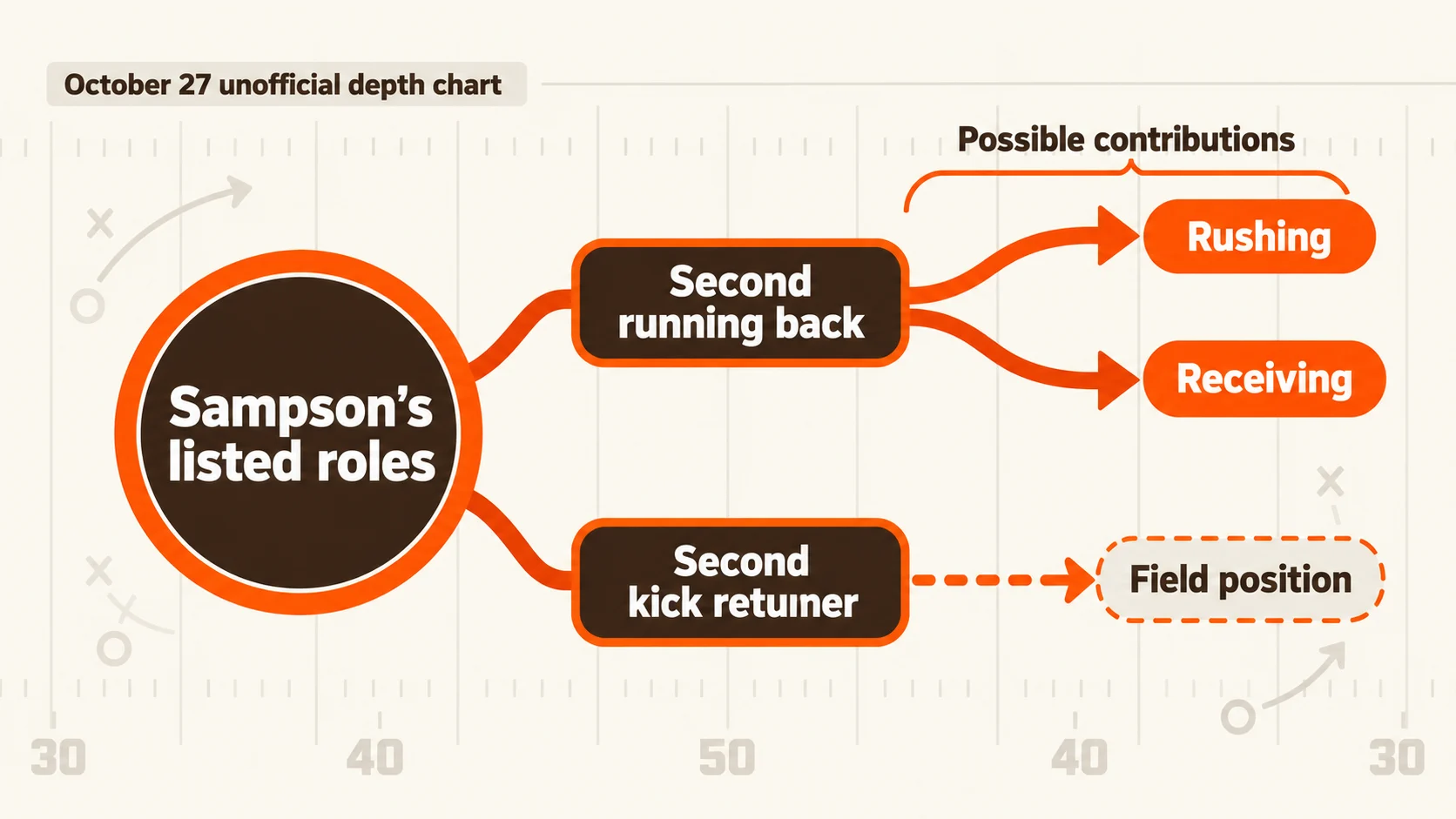
Sampson is listed second at running back and kick returner on Cleveland's October 27 unofficial depth chart. Quinshon Judkins is listed first at running back, while Malachi Corley leads the kick returners. The chart provides positional order without assigning a fixed number of touches.
Cleveland next plays Sunday, November 1, at Pittsburgh's Acrisure Stadium, with kickoff at 1 p.m. ET on CBS, according to that announcement. Sampson's Tennessee performance gives Cleveland something concrete to build on heading into the matchup.
Judkins rushed for 96 yards and two touchdowns on 17 carries, per Russo. Cleveland totaled a season-high 183 rushing yards and improved to 5-2. Sampson's production came alongside an effective lead back, showing how both could contribute within the same game.
The broader rushing picture matters, too. Watson and KC Concepcion Jr. combined for 42 yards on six carries, according to the team's October 26 follow-up. Todd Monken emphasized the value of rushing contributions from players beyond the running backs. Sampson fits into that larger mix.
The Browns activated Sampson from injured reserve on October 24. Their announcement said he injured his knee in the season opener at Jacksonville, went on injured reserve September 15 and was designated for return October 14. Cleveland selected him in the fourth round in 2025.
Sampson's nine touches also put the performance in perspective. He made an impact without needing a heavy workload. That gives Cleveland a useful starting point for planning a rotation: a second back can influence a game through a handful of productive chances.
If he plays against Pittsburgh, watch what happens between the long gains. Carries that keep Cleveland out of difficult passing situations and receptions that extend possessions would help establish a role the offense can sustain. The useful question is whether his involvement keeps drives moving when an explosive play is unavailable.
The kick-return listing adds a separate potential contribution. A return opportunity could let him affect field position without changing the offensive balance between Judkins and Sampson. A productive return could shorten the distance the offense needs to travel before a scoring chance. That makes special teams worth watching alongside his carries and catches, while the actual opportunities will depend on how the game unfolds.
For the season, the goal should be an offense with several ways to advance the ball. Sampson's return strengthens that possibility because Cleveland can involve him as a runner or receiver. Building on it should mean making the rotation work across possessions, with each back contributing to the same offensive plan.
Image: AI-generated image.


Leave a Reply